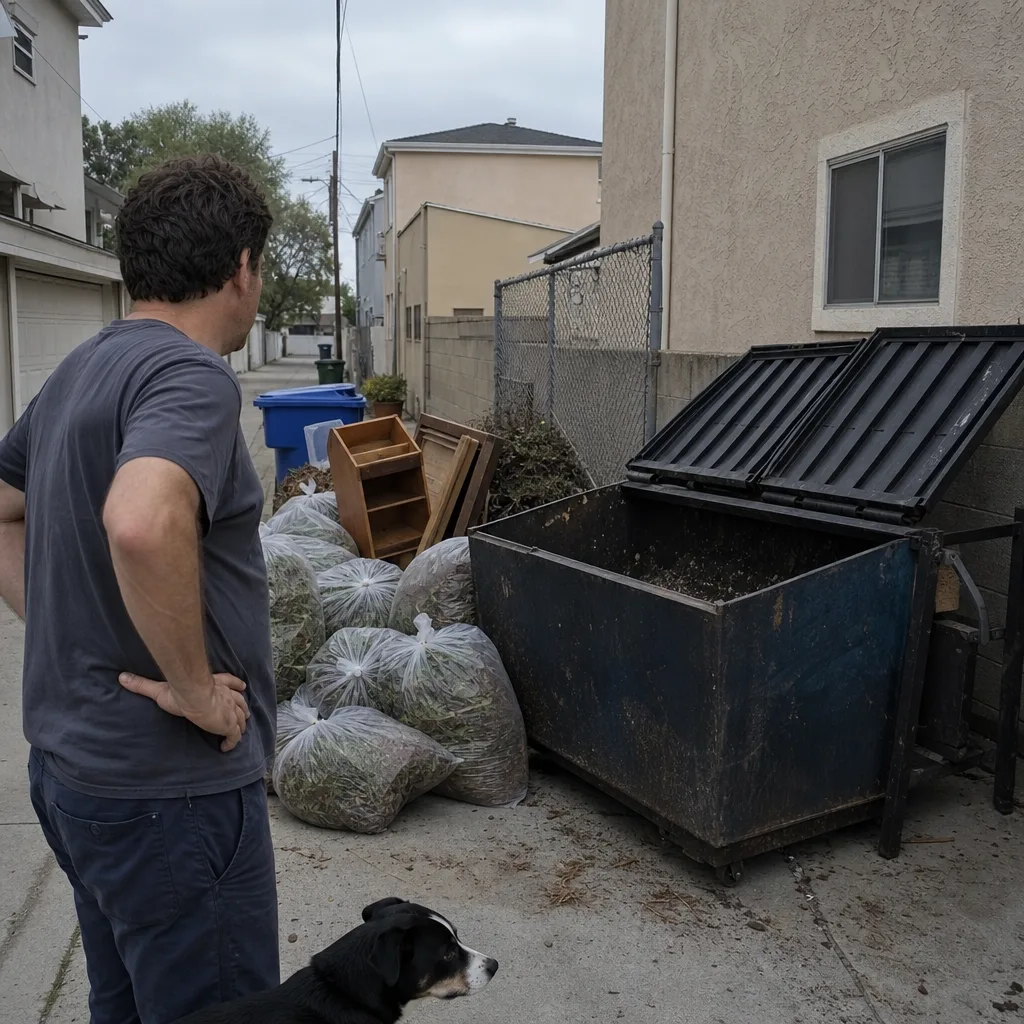
What a 2 Yard Dumpster Looks Like
Most people picture a giant roll-off when they hear the word dumpster. That's not this. This bin is closer in size to a big chest freezer, or maybe two washing machines pushed side by side. Small enough to tuck beside a garage. Big enough to swallow a weekend cleanout.
So what does it look like up close? Picture a metal box with a slanted face. The front slopes down toward you, the back stands straight up. That shape helps the truck tip it cleanly when it's time to empty.
The numbers vary a bit by maker. But most 2 yard bins land around 72 inches wide, 30 to 36 inches deep, and 36 to 48 inches tall. That works out to about 54 cubic feet of space inside.
Here's what you'll notice when one shows up at your place:
- A steel body, usually painted dark green, blue, gray, or black
- Two hinged plastic lids that flip up from the back
- Fork pockets on each side so a front-load truck can lift it
- A slanted front panel that's lower and easier to toss bags over
- Sometimes small wheels, which help in tight alleys and driveways
Those lids matter more than people think. They keep rain out during the wet months. They also keep raccoons, gulls, and curious neighbors from digging through your stuff.
We see this reaction all the time. A homeowner in Sunset Park braces for a huge bin, then laughs when the truck backs in. "That's it?" Yep, that's it.
And that small footprint is the whole point. Lots in Ocean Park and Mid-City are tight. Many homes share narrow alleys or have one-car driveways. This size fits where a 10 or 20 yard roll-off never could. It sits in about the same space as a parked motorcycle.
You've also seen these bins behind the shops on Main Street and Montana Avenue. Restaurants and small offices use them for regular trash pickup. Same bin, same shape. The only difference is how often it gets emptied.
How high will you have to lift your bags? Not very. The front lip usually sits around waist to chest height on most adults. Kids can't toss things in easily, but most grown-ups can load it without a step stool. Heavy items are a different matter, since lifting them that high takes more effort.
One quick fieldwork tip from our crew: measure your spot before delivery day. Give yourself at least 8 feet of width and 5 feet of depth. That leaves room to open both lids and walk around the bin. It also gives the truck a clean angle to grab it.
Overhead space counts too. Low eaves, carports, and tree branches can block the truck's forks. We've had to reposition bins under a carport in Wilshire Montana more than once. A two-minute check saves a lot of hassle.
Small bin. Real capacity.
What Fits Inside a 2 Yard Dumpster
Two cubic yards sounds small on paper. It's 54 cubic feet of space. That's enough room for a real cleanup, as long as the job stays modest.

Here's the easiest way to picture it. This bin holds about 10 to 12 stuffed 33-gallon contractor bags. Or think of a full-size pickup bed loaded level with the sides. That's roughly the same amount of stuff.
So what kinds of jobs fit that space? We see the same projects again and again across Santa Monica. Most of them share one thing in common. They're one-room jobs, not whole-house jobs.
- A garage shelf purge or a single closet cleanout
- Yard trimmings after pruning hedges in a Sunset Park backyard
- Old carpet pulled from one bedroom
- A small bathroom tear-out with a vanity and some tile
- Leftover boxes and packing junk after a move into a Mid-City apartment
Notice what's missing from that list. Full kitchen remodels and roof tear-offs won't fit. Neither will a whole estate cleanout. Those jobs need a bigger bin, and trying to squeeze them into a small one just means a second haul.
Weight matters too, not just space. A small bin can fill up fast with heavy stuff like dirt, brick, or concrete. Light, bulky items take up room but don't weigh much, while heavy debris does the opposite. A few buckets of broken concrete can hit the weight limit long before the bin looks full.
One customer in Ocean Park learned this the easy way. She was sure she'd need a big bin for her garage. But after we walked through it with her, most of her pile was old paint cans and a broken bike. The paint couldn't go in anyway. The rest fit in the bin with room left over.
That brings up the stuff that can't go inside at all. Paint, batteries, tires, old electronics, and chemicals usually need special handling. Toss them in the bin and the load could get rejected. And nobody wants that headache on pickup day.
Still not sure your project fits? Most people guess too big or too small on their first try. Our complete dumpster size guide shows how this size stacks up against larger options so you can match the size to the job. It's worth a quick look before you book, especially if your project might grow halfway through. Projects almost always grow. The garage turns into the side yard, then the side yard turns into the shed.
Pick the size that fits the job you have.
Is a 2 Yard Dumpster Big Enough for Your Project
Here's the honest answer. This size is great for small jobs. It's not built for big ones. Picture about one pickup truck bed of space. That's roughly 10 to 15 full kitchen trash bags, depending on how well you pack it.
We get this question every week from homeowners in Ocean Park and Sunset Park. Most of them are clearing out one room, not a whole house. So this size usually fits them just right.
Wondering if your job makes the cut? These are the projects we see fit best:
- A garage or closet cleanout with no big furniture
- Yard waste from trimming hedges or pulling weeds
- A small bathroom tear-out, like one vanity and some tile
- Leftover junk after moving out of a Mid-City apartment
- That spring cleaning pile you've been ignoring for a year
Notice what's missing? Couches. Mattresses. Full kitchen remodels. Bulky items eat up space fast and won't lie flat in a small bin.
Weight is the other catch. Dirt, concrete and brick get heavy quickly. The bin can look half empty and still be too heavy to haul. Roofing shingles cause the same problem, since they weigh far more than they look.
Here's a mix-up we see a lot. A homeowner near Wilshire Montana books a small dumpster for a bathroom refresh. Then they decide to pull up the hallway carpet too. By Saturday afternoon the bin is overflowing, and they need a second haul. One quick call before the job would've saved them the hassle.
Want to avoid that? Run through this quick check before you book:
- Walk through the space and picture it all in one truck bed.
- Look for anything long or bulky, like doors, rugs or furniture.
- Check for heavy stuff such as dirt, tile or concrete.
- Add a little extra room for the junk you'll find once you start.
- If you're still on the fence, go one size up.
That fourth step matters more than people think.
Everyone finds more junk than they planned. Every single time. Old paint cans turn up behind the water heater. Boxes appear from under the stairs. We tell clients to plan for it up front.
But the small size has a real upside in Santa Monica. It fits in tight driveways and narrow alleys. That's a big deal North of Montana, where street parking is hard to come by. And keeping the bin on your own property can help you skip the street permit. Putting a dumpster on a public street usually needs a permit from the City of Santa Monica.
So if your job is one room, one yard or one weekend of cleaning, you're probably in good shape. Bigger than that? You'll want more room.